

Linerless Aluminum Foil Tape for Underfloor Heating: Applications and Benefits
Every joint and seam in an underfloor heating insulation layer is a potential point of heat loss. A small gap between boards can redirect warm air downward into the subfloor, forcing the system to consume more energy. Aluminum foil tape for underfloor heating addresses this by sealing, reinforcing, and protecting the insulation layer.
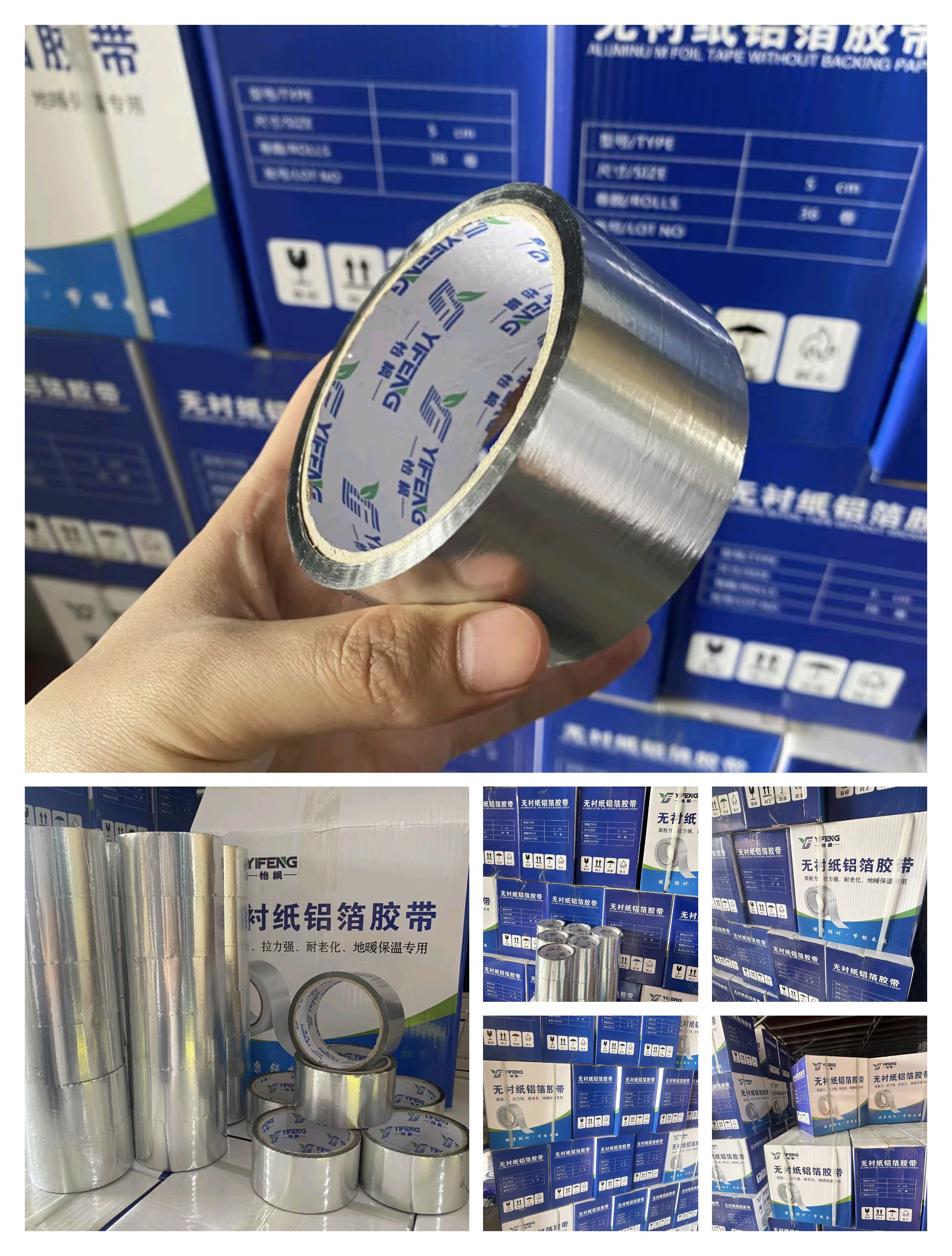
What Is Aluminum Foil Tape for Underfloor Heating?
Aluminum foil tape is a pressure-sensitive adhesive product with an aluminum foil backing, engineered for thermal insulation in radiant floor systems. The foil provides high tensile strength, effective heat reflection, and an impermeable moisture vapor barrier. A quality product from an experienced manufacturer typically ranges between 30 and 50 microns in thickness, with an adhesive formulation designed for the warm, occasionally humid environment inside floor constructions.
Unlike general-purpose tapes, heating-specific products are tested for bond integrity under sustained warmth and repeated thermal cycling. An insulation layer that loses its sealed joints after a few heating seasons will gradually undermine the efficiency of the entire system.
Why Proper Taping Matters in Underfloor Heating
Underfloor heating systems require a continuous insulation plane to direct heat upward into the room. When boards are laid across a subfloor, the joints between them are the most vulnerable points. Without sealing, heated air escapes and the floor covering receives less warmth than it should, forcing the system to consume more energy.
Using aluminum foil tape on every joint creates a continuous insulation envelope, acts as a vapor barrier against ground moisture, and reflects radiant heat back toward the room when oriented correctly. All three functions work together to improve system responsiveness and reduce energy waste.
Linerless vs. Linered Aluminum Foil Tape
Standard foil tape is wound with a protective paper liner between each turn. Linerless foil tape eliminates this interleaf: the adhesive is protected by a silicone-coated reverse side of the foil itself.
For large underfloor heating installations, linerless tape saves time and reduces waste. Without a liner to peel and discard, the roll applies faster across wide floor areas. The tradeoff is that the exposed adhesive demands a clean working surface; professional installers handle this by keeping the substrate dust-free and working in a methodical sequence.
Temperature Resistance and Thermal Cycling
Radiant floor heating exposes every material to repeated heating and cooling cycles, placing cumulative stress on adhesive seals. A quality foil tape should maintain its bond across the full operating range, typically rated between 80 °C and 120 °C for continuous service. The adhesive must remain flexible rather than becoming brittle, and the foil backing must accommodate minor thermal expansion and contraction without cracking, preserving the sealed joint through many seasonal cycles.
Adhesive Types and Their Performance
Rubber-based adhesives bond quickly with strong initial tack on clean, dry surfaces and perform reliably in typical floor construction conditions.
Acrylic-based adhesives take longer to reach full bond strength but offer superior long-term temperature stability and aging resistance. They tolerate slight variations in surface conditions and maintain their seal over extended service periods, making them a preferred choice for premium or long-warranty installations.
Proper Application Technique
Even the best foil tape underperforms on a poorly prepared surface. The most critical step is ensuring insulation boards are clean, dry, and free from dust, grease, or loose particles. Contamination at the bond line weakens the seal and risks premature failure.
When applying tape, press it firmly along the full joint length using a flat-edged tool or squeegee to ensure complete adhesive contact and expel trapped air. Overlap adjacent strips by at least 25 to 50 millimeters to create a redundant seal resistant to movement over time.
Thermal Expansion Standards for Sealed Joints
The aluminum foil in the tape expands and contracts with every heating and cooling cycle, and the adhesive must flex with it without losing grip. If the tape is too rigid or the adhesive degrades after repeated cycling, the seams gradually open and silently reduce the system's thermal efficiency.
A reputable manufacturer tests products for thermal cycling resistance, evaluating how the sealed joint performs after dozens or hundreds of heat-cool transitions. Choosing a tape validated for cyclic stress testing ensures the seal remains intact throughout the heating system's operational life.
Integrating Foil Tape with Reflective Insulation Films
Aluminum foil tape is most effective as part of a complete reflective insulation strategy. Reflective foil films are installed beneath heating pipes or cables to redirect radiant heat upward, but their performance depends on continuous, uninterrupted coverage. Foil tape seals the joints between adjacent sheets of reflective film, completing the thermal barrier and eliminating gaps through which heat would otherwise escape. Without the tape, even the best reflective film leaves a thermal shortcut at every seam.
Sourcing from a Specialist Tape Manufacturer
Not all aluminum foil tapes are engineered for the demands of radiant floor heating. When evaluating a supplier, look for consistent product quality across batches, technical specifications that include thermal resistance ratings and vapor permeability data, and quality control testing on every production run. A manufacturer with experience in insulation materials and radiant heating applications understands the performance requirements that a purpose-built tape must meet.
The right foil tape, applied correctly, protects the insulation layer and preserves the efficiency of the underfloor heating system for years to come.
References
ASTM C1136-17. Standard Specification for Flexible, Low Permeance Vapor Retarders for Thermal Insulation. ASTM International, West Conshohocken.
ASHRAE Handbook—HVAC Systems and Equipment. American Society of Heating, Refrigerating and Air-Conditioning Engineers, Atlanta, 2021.
ISO 10456:2007. Building Materials and Products — Hygrothermal Properties — Tabulated Design Values and Procedures for Determining Declared and Design Thermal Values. International Organization for Standardization, Geneva.
European Standard EN 12667:2001. Thermal Performance of Building Materials and Products — Determination of Thermal Resistance by Means of Guarded Hot Plate and Heat Flow Meter Methods. European Committee for Standardization, Brussels.